Table Of Content
But those ideas would seem far more powerful in this context if more of these episodes didn’t seem like another of their own creations. In recent years, alongside his artistic pursuits, Neto has delved into percussion. Throughout the exhibition, the sculpture, incorporating a series of instruments, will intermittently come to life through a musical program orchestrated by musicians and groups from diverse corners of the globe, with a particular focus on the rhythmic traditions of African and Asian diasporas.

Recently viewed
Designers shape the world around us. Netflix's new docuseries Abstract explores how. - Vox.com
Designers shape the world around us. Netflix's new docuseries Abstract explores how..
Posted: Fri, 10 Feb 2017 08:00:00 GMT [source]
In this manner, Purposer can generate realistic motion sequences in diverse test scenes. Through exhaustive evaluation, we demonstrate that our multi-contextual solution outperforms existing specialized approaches for specific contextual information, both in terms of quality and diversity. Our model is trained with short sequences, but a byproduct of being able to use various conditioning signals is that at test time different combinations can be used to chain short sequences together and generate long motions within a context scene. Digital art, hard-edge painting, geometric abstraction, minimalism, lyrical abstraction, op art, abstract expressionism, color field painting, monochrome painting, assemblage, neo-Dada, shaped canvas painting, are a few directions relating to abstraction in the second half of the 20th century.
TV News & Guides
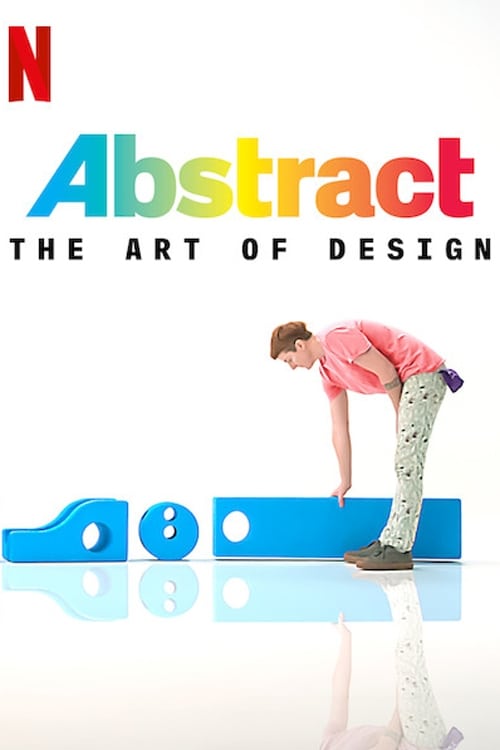
A selection Neto’s woven works populate the space, imbuing the exhibition with a tapestry of history and symbolism. Curated by Jacopo Crivelli Visconti, Nosso Barco Tambor Terra [Our Boat Drum Earth], the exhibition’s form emerges from months of meticulous dialogue with MAAT’s architectural space and the museum’s surroundings. It’s hard to build a series on arguing for the necessity for particular ideas, and “Abstract” shows why it’s even harder to do so while arguing for particular people. There’s the specific task of giving an overview of their areas of expertise, all while showing why the particular episode’s subject is worthy of singling out. Here, that sometimes distracts from presenting a full view of what lies behind some of these individuals’ work. Step inside the minds of the most innovative designers in a variety of disciplines and learn how design impacts every aspect of life.
Episodes
All of artists featured across the book are unique, and so are their creative processes. In the United States, Art as Object as seen in the Minimalist sculpture of Donald Judd and the paintings of Frank Stella are seen today as newer permutations. Other examples include Lyrical Abstraction and the sensuous use of color seen in the work of painters as diverse as Robert Motherwell, Patrick Heron, Kenneth Noland, Sam Francis, Cy Twombly, Richard Diebenkorn, Helen Frankenthaler, Joan Mitchell, and Veronica Ruiz de Velasco. Weekly updates on the latest design and architecture vacancies advertised on Dezeen Jobs. Daily updates on the latest design and architecture vacancies advertised on Dezeen Jobs. "Interior designer Ilse Crawford creates spaces and objects that engage the sense and promote well- being, from high-end hotels to IKEA furniture," said Netflix.

lacma presents Zeng Fanzhi: Near and Far/Now and Then
By creating an account, you agree to the Privacy Policy and the Terms and Policies, and to receive email from Rotten Tomatoes and to receive email from the Fandango Media Brands. The exhibition is co-curated by Michael Govan, LACMA CEO and Wallis Annenberg Director, and Stephen Little, Florence and Harry Sloan Curator of Chinese Art and Department Head, Chinese, Korean, and South and Southeast Asian Art. "They all have a compulsion, an obsession to make something. It gets into their system and they can't let go of it," Moss said, explaining that the vision or the final product is secondary to the process. Moss also found that his subjects consistently found ways not to let the fear of failure or mistakes prevent them from starting.
The series follows eight leading designers operating in different industries. There are episodes dedicated to Ingels, Devlin and Crawford, as well as graphic designer Paula Scher, automobile designer Ralph Gilles, Nike shoe designer Tinker Hatfield, illustrator Christoph Niemann and photographer Platon. These designers, the show argues, reached their current place in the public consciousness because they dared to devise a new set of criteria for their own success. In almost every case, there’s no denying that these contributions have had tangible effects in the real world.
Key Milan design week installations
Both projects involved research with secondary sources, one in Hoefler’s own reference library, the other at the map room of the New York Public Library, guided by the curator of one of the library’s most distinctive special collections. The series’ insistence on rooting this exploration of design squarely through the lens of single individuals makes a slide into a hagiographic approach all the easier. Oxman’s episode, which outside of a few nods towards some creations at and from the MIT Media Lab, is largely an exercise in aspirational psychotechnical speak.
Log in or sign up for Rotten Tomatoes
These openings connect two larger works, one at each end of the space as on the ground floor, but, in this case, the two paintings are not strictly representational but instead suggest abstractions of light and water. A selection of Zeng’s smaller format oil paintings and works on paper are respectively featured in and around Ando’s temporary walls. Against the backdrop of the Misericordia’s majestic spaces—steeped in history and richly decorated with frescoes—Zeng’s project grounds his audience in the visceral experience of art. Many of the abstract artists in Russia became Constructivists believing that art was no longer something remote, but life itself. The artist must become a technician, learning to use the tools and materials of modern production. Varvara Stepanova and Alexandre Exter and others abandoned easel painting and diverted their energies to theatre design and graphic works.On the other side stood Kazimir Malevich, Anton Pevsner and Naum Gabo.
Watch all eight episodes of Netflix's Abstract: The Art of Design series
Aside from the thesis that Spalter is a primary reason for the app’s rise in users (supported with a tenuous clump of data), the episode becomes a bizarre IG victory lap, propping up the platform’s success in relation to peers past and present, like MySpace and Snapchat. With a cursory acknowledgment of parent company Facebook’s recent issues of public trust, Spalter’s episode is another indicative example of a series that wants to extol the virtues of designers without reckoning with any unintended consequences their work might have. For all the discussion about how much change this work is bringing in the world, the only nod to failure is a handful of blog posts that didn’t like the redesigned Instagram logo right away.
Each image is accompanied by a quote from Sillman, explaining what step that particular draft represented in her process. In one chapter, Moss speaks with Amy Sillman, an abstract painter who Moss admires for her unique use of color and shape. This space is less menacing than most dens of torture; there aren't any medieval instruments of pain after all.
Cubism, based on Cézanne's idea that all depiction of nature can be reduced to cube, sphere and cone became, along with Fauvism, the art movement that directly opened the door to abstraction in the early 20th century. "Architect Bjarke Ingels unites function, fantasy and sustainability in 'pragmatic utopian' designs like a clean power plant topped with a ski slope," said Netflix. In his episode, filmed before the opening of his Serpentine Pavilion in London, Danish architect Ingels explains how he is changing people's perception of architecture.
That comes to a head with a discussion of Walden Pond, which sends the episode on a philosophical tangent, underlining how “Abstract” often asks its audience to connect with these people on the lofty poetry of what they’re saying rather than what they’ve created. "Paula Scher paints with words as an American graphic designer, artist, and educator," said Netflix. "For more than three decades she has been at the forefront of graphic design and developed identities for esteemed institutions such as The Public Theater in NY, Jazz at Lincoln Center, Target, Bloomberg, and Microsoft." This episode focuses on how graphic designer Scher, the first female principal at Pentagram, shaped the face of New York. These episodes also do feel tailored to their subjects, not just because this is another slate of different directors pursuing their own ends.
There are poets, painters, chefs, sand castle sculptors and crossword puzzle makers. In its six-episode Season 2, “Abstract” focuses on a half dozen individuals in various corners of the design world, across bioengineering, digital products, and typography. Different directors (including Neville, Dadich, and recently minted Oscar-winner E. Chai Vasarhelyi) visit the offices, homes, and neighborhoods of these creators in an attempt to document the process by which their work jumps from a desk and into the public consciousness.


No comments:
Post a Comment